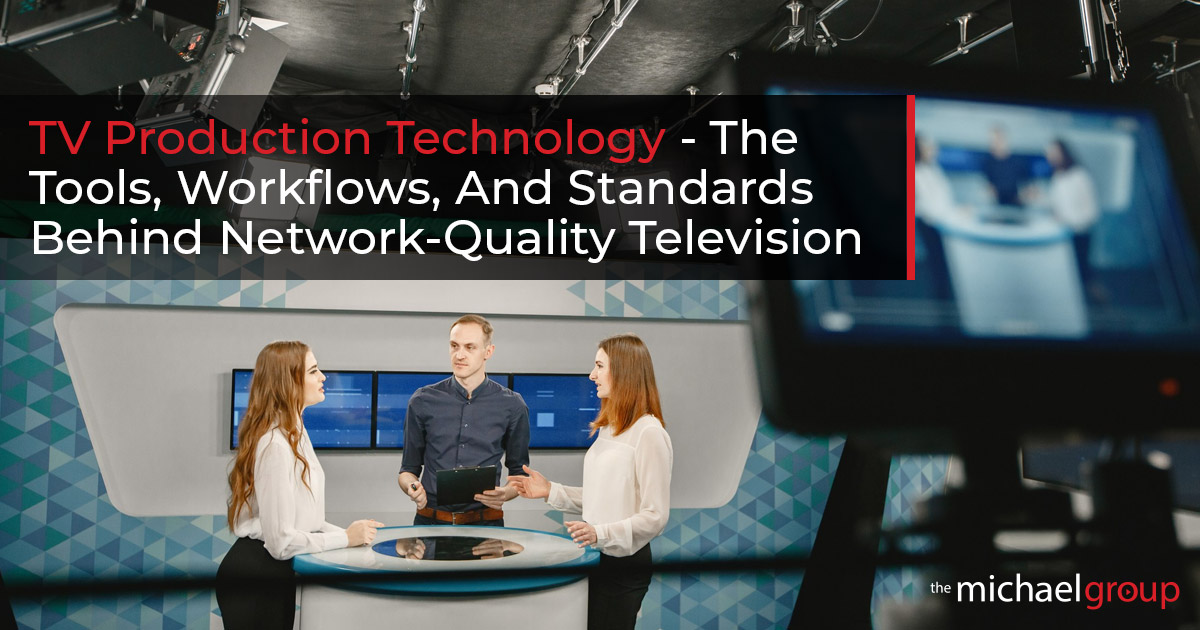
Modern television production has developed greatly in recent years. Consider the sitcoms from the 90s, with a live audience that clapped and cheered on cue. Now, these reactionary sounds are added through sound effects, allowing sets to become more complex, timing to be more controlled, and overall quality to be more polished. This is just one way that network-quality television has set the bar high for any efforts in TV production.
Network-quality television has certain standards, and if you want to compete for the time, money, and attention of viewers, you need to meet or surpass them.
One of the most effective ways to achieve this goal is by adopting the tools, workflows, and experience required to deliver these results. But what does this mean?
With so many streaming services and networks for viewers to browse, you need to ensure you remain competitive.
This means that you have to offer:
For example, video standards cover resolution, frame rates, and color spaces. Audio standards dictate loudness, as well as stereo versus surround sound. Distribution standards are also specific, and include details such as common codecs and wrappers. Regulatory and network requirements further dictate that you need certain quality control processes and regional compliance.
These standards exist alongside emerging trends in TV production technology, which bring their own set of challenges and considerations. That is why it’s so important to come back to the basics and optimize your tools and workflow to produce network-quality television.
The best way to consider important tools in TV production is to break the infrastructure down into the key components needed to create a polished and professional production.
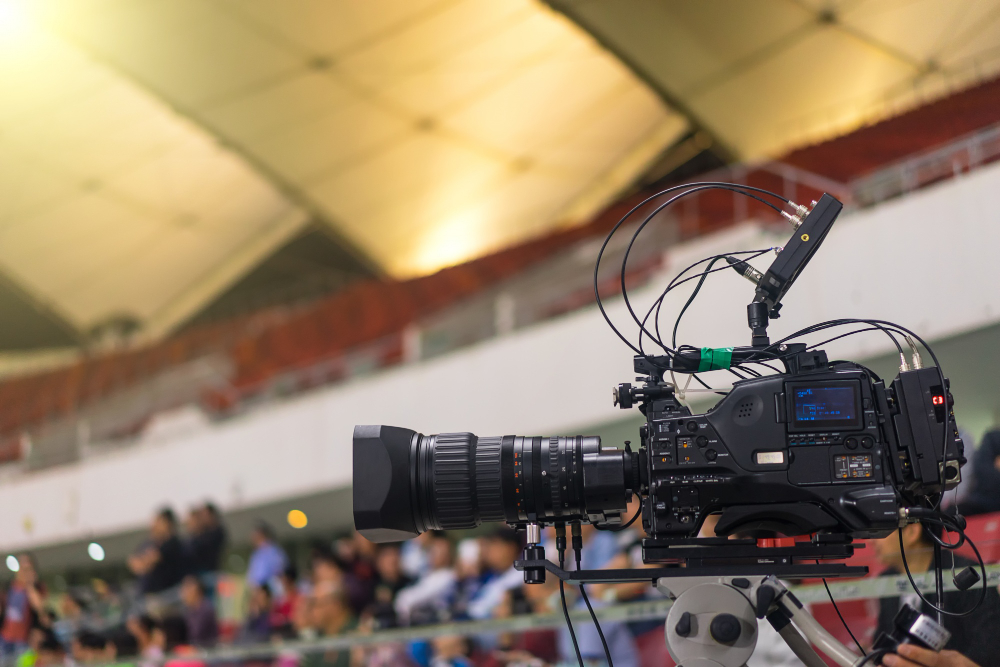
Cameras are often positioned as the foundation of any TV production, and for good reason, as they are the tool responsible for capturing the visual content used for further editing. However, no camera is the same. Instead, key considerations such as resolution, formatting, frame rates, dynamic range, and the number of camera set-ups all need to be taken into account.
Cameras are also used in conjunction with capture technology, which determines how the media is stored and recorded. This is also a crucial consideration when it comes to quality post-production. Combined with audio equipment, cameras can be described as a content acquisition system, which is essential for long-term reliability and integration with other systems in the production workflow.
One of the defining aspects of television is that it offers an auditory experience as well as a visual one. This audio experience can be dismal if the equipment is not up to scratch. Audio equipment is responsible for capturing clear and consistent sound and involves a number of different tools, such as microphones, field recorders, and audio mixers. High-quality audio equipment, combined with expert handling, ensures clear and balanced dialogue that is essential to meet a professional standard.
Even the best cameras can fail to deliver if they are not set up with carefully considered and high-quality lighting technology. Consider how studio lighting set-ups are important for creating mood and contributing to the overall feel of a production, or how portable lighting for on-location shoots can help overcome environmental challenges. By implementing proper lighting tools, subjects and actors are clearly visible, unwanted shadows are reduced, and the overall tone and visual consistency of the TV production are maintained.
TV production, much like other forms of video production, is a fast-paced process with little room for errors and delays. That is why monitoring tools are essential, allowing production teams to review video and audio in real time. Equipment such as reference monitors, waveform monitors, and audio meters all play a role in monitoring recordings to ensure that quality control is maintained and that technical standards are met throughout production. This reduces the need for retakes, costly delays, and addressing other errors.
Some TV productions require multiple video sources; for example, live productions and multi-camera environments take data from various equipment. In these instances, vision mixers and switches are important tools to allow operators to select shots and transitions and even integrate graphics in real time, allowing for a seamless viewing experience while still working with the chosen production layout and choice of equipment.
Much of TV production equipment is focused on the production side of the workflow, where footage is filmed and recorded. However, editing software and post-production tools are just as important, and high-quality tools are needed to assemble, refine, and finalize content for distribution.
Specific software exists for cutting footage, correcting color, and sound editing. Other editing tools are also needed for adding graphics or effects. Depending on the team, there may also be non-linear editing systems, which allow for more flexibility and greater precision in achieving a polished final product. The specific editing software needed will depend on the requirements of the production, the complexity of the project, and the desired final output.
Each of these key tools and pieces of equipment has a place within the TV production workflow, which, much like other forms of video production, can be categorized into four main areas.
Pre-production is the planning phase and lays the foundation for network-quality television. It involves key tasks such as script development, storyboarding, scheduling, and budgeting. Technical planning is also included in the pre-production phase of the workflow, where teams discuss details for cameras, lighting, audio, and other essential elements. At this stage, potential challenges are considered, and solutions are preemptively put in place to address them.
During the production phase, the visual footage and its accompanying audio are captured through a coordinated effort from various crew members. Whether production takes place in a studio or on location, the process involves coordinating camera operations, audio recording, lighting, and switching technologies. Precision and consistency are key considerations for producing network-quality television, so it is also important to incorporate monitoring tools to maintain technical standards.
The success of a production depends on a post-production workflow, which is carried out by the editing team, who work tirelessly (and expertly) to assemble the raw footage into a final product. Steps such as cutting footage, correcting color, syncing sound, and adding visual effects are all part of the post-production process, and each step involves its own set of expertise for network-quality outputs. In post-production, the workflow is highly structured to ensure consistency and compliance with broadcast standards.
Distribution is an often-overlooked stage of TV production, but an essential part of delivering the final product to broadcasters, streaming platforms, and distribution partners. From exporting content in the correct format and meeting specific codec and resolution requirements to passing quality control checks, distribution must align with the necessary technical and regulatory standards to be classified as network-quality television. This is not only about quality distribution, but also about delivering a seamless viewing experience.
Producing network-quality television demands more than the right equipment and workflow, it also requires the right team to manage the process and bring all the elements together seamlessly.
At The Michael Group Productions, we are proud to offer a creative and professional team that is experienced with industry-standard tools, works within proven production processes, and has the knowledge of industry standards to support your production.
No matter the size of your project, we’re just a phone call away. Contact us at 312-498-4440.
