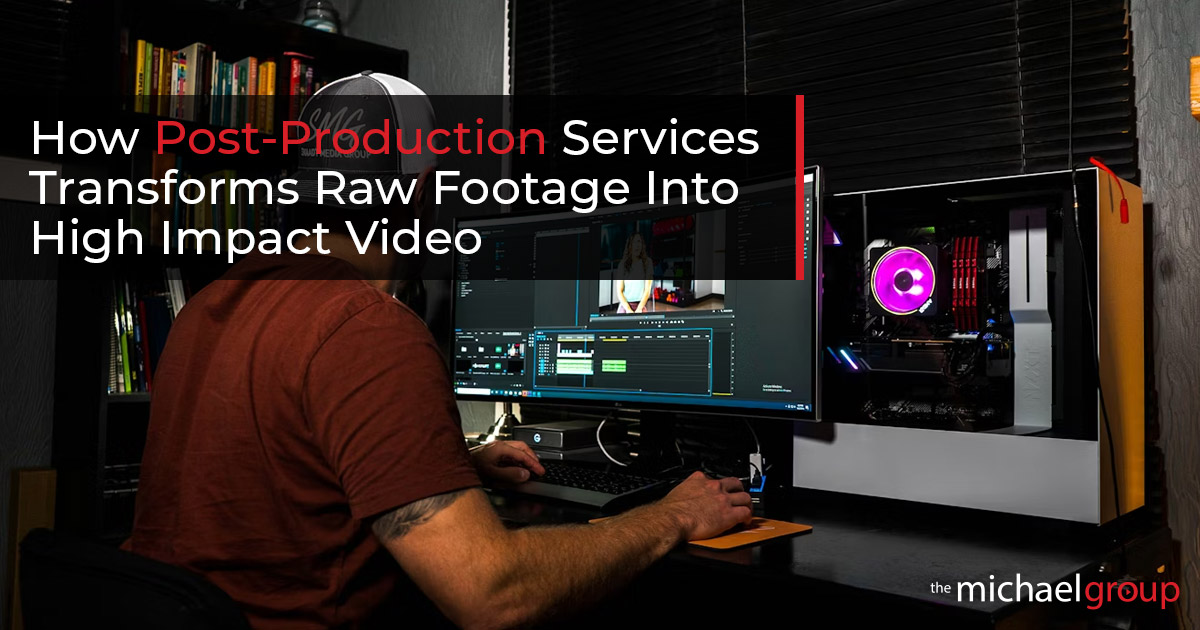
Video has become an increasingly powerful asset across marketing, education, and storytelling. Yet what many people don’t realize is that compelling video content is built through a series of distinct production stages, each requiring its own technical expertise and creative decision-making.
It’s easy to think of video production as simply setting up equipment and pressing “record.” In reality, raw footage is only the starting point. Without refinement and structure, even the best-shot footage can fail at achieving the end goal. This is where post-production becomes essential by shaping not just how a video looks and sounds, but how it feels and what it communicates.
Whether you’re promoting a new product, training a corporate team, or sharing a meaningful story for a fundraiser, post-production transforms raw footage into a polished, engaging, and action-driven video.
Here’s how the post-production process turns captured moments into high-impact visual storytelling.
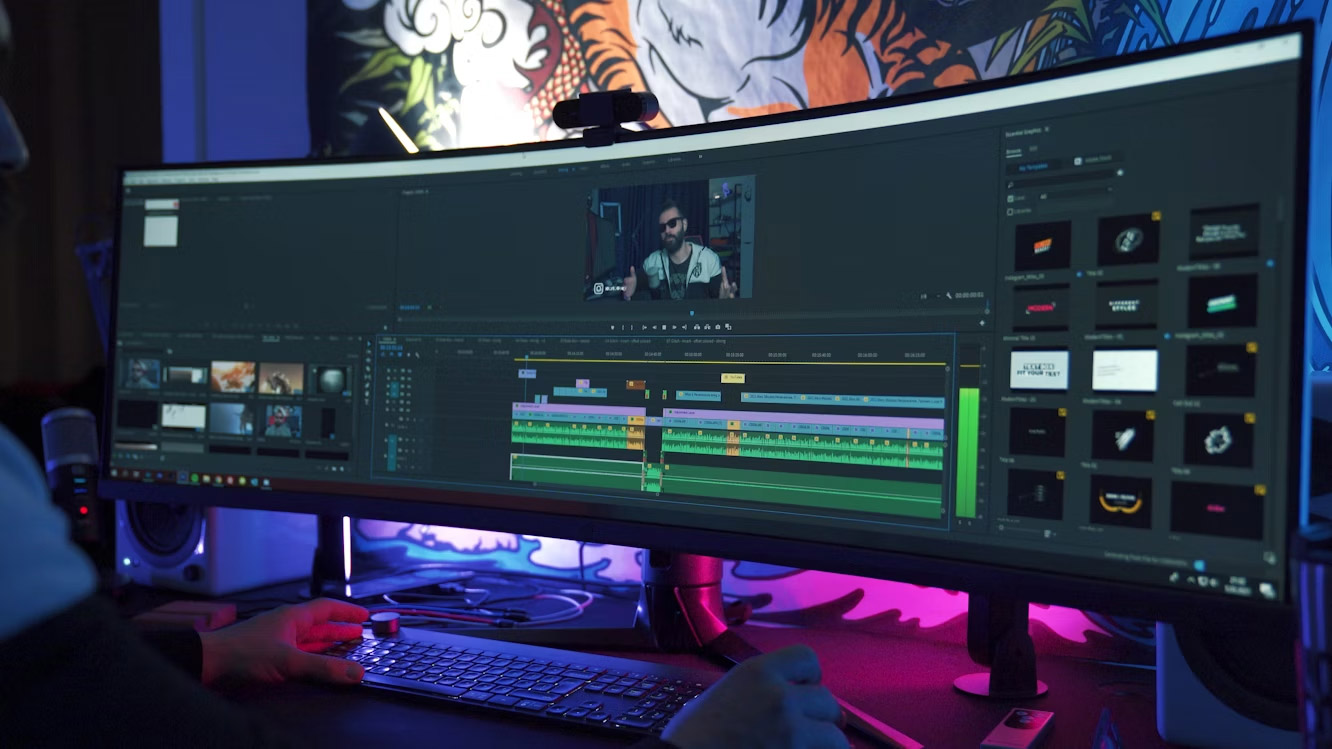
If you’re unfamiliar with the term raw footage, it refers to the unedited video and audio captured during the production phase of a video project. This includes every recorded clip—successful or not—along with ambient sound, dialogue, b-roll, and multiple camera angles, all of which fall under the umbrella of raw footage.
At this stage, raw footage is unrefined and unstructured, simply serving as the visual and audio material gathered to tell a story. There’s no pacing, no polish, and no narrative flow yet.
While each clip is captured strategically, with cameras positioned, lighting adjusted, and audio recorded, the production phase is often limited by time, environment, and practical constraints. This can result in multiple takes, inconsistencies in lighting and sound, and moments where performances don’t go as planned.
Once filming ends, these individual moments become puzzle pieces that are assembled in the post-production phase, where raw footage is transformed into a finished video with clarity, emotion, and purpose.
Post-production describes the phase of video production that takes place after filming ends, where raw footage is edited, refined, and shaped into a shareable video. Clips are selected and arranged, colors are adjusted, audio is cleaned up, graphics and text are added, and the overall flow of the video is established.
The process may involve cutting together the best takes from an interview, balancing background music so dialogue is clear, or correcting lighting inconsistencies. It is also the phase where captions are added for clarity, and the final video is formatted for distribution.
Post-production plays an important role in determining the overall quality and effectiveness of a video by ensuring the content looks polished, sounds clear, and communicates its message effectively. Without quality post-production, even professionally shot footage can feel disjointed, causing the entire project to fall flat.
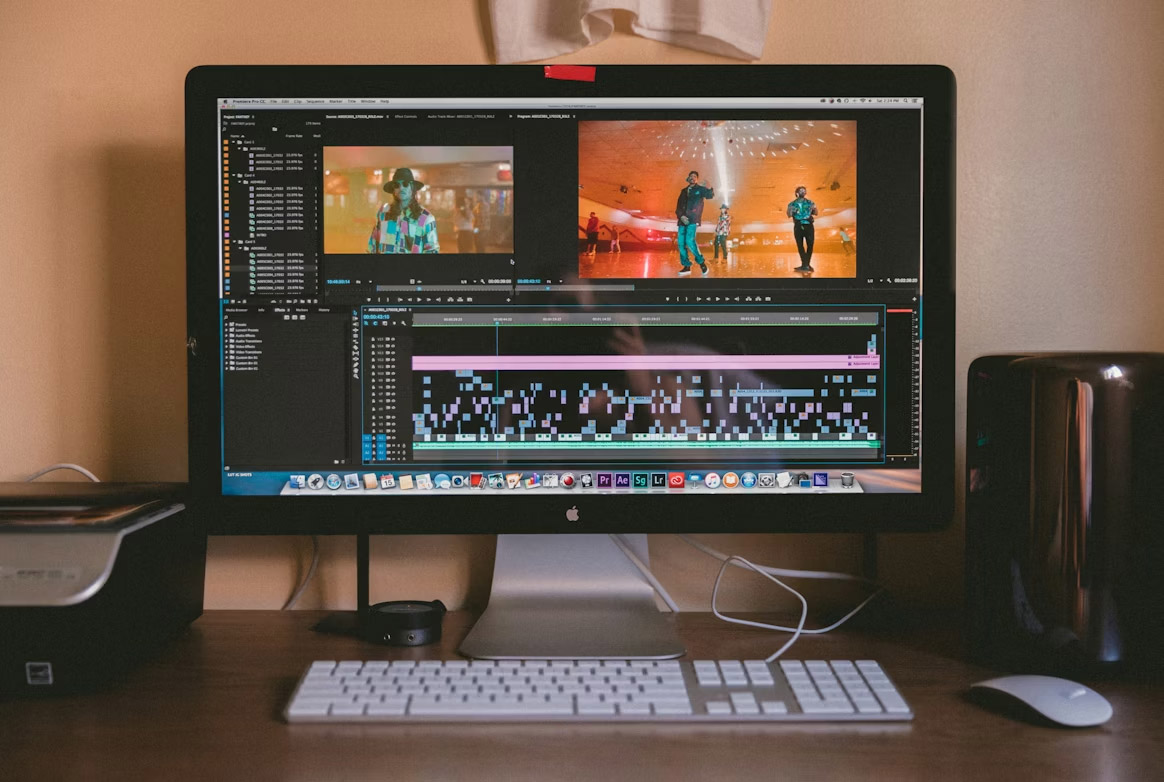
Let’s take a closer look at the various stages of post-production and how they transform raw footage into a powerful video.
The first step of post-production involves editing the narrative flow, where editors shape the story by turning an excess of footage into a clear and compelling narrative.
Careful attention is paid to pacing, structure, and emotional rhythm, as raw footage is cut together into a coherent flow. This stage also involves removing distractions and highlighting key messages to help achieve the overall goal of the video.
Even when camera angles are perfectly set during the production phase, issues such as lighting inconsistencies, color imbalances, or unintended moments can still appear. This is where post-production enhances visual quality through color correction and color grading, ensuring the overall aesthetic is smooth, consistent, and aligned with the tone of the production.
By creating visual consistency across scenes, post-production supports an easy and enjoyable viewing experience. It also uses carefully selected shots and visual adjustments to reinforce brand identity and mood, contributing to a more powerful and engaging final video.
The beauty of video is that it taps into multiple senses—not only as a visually stimulating medium, but also as an auditory experience. However, audio can just as easily let a video down if it isn’t carefully edited during post-production.
Audio from the raw footage is cleaned, and dialogue is balanced, with background noise removed and the clearest recordings selected for the final cut. Sound design and ambient audio help make the video feel more realistic, while music is added for emotional resonance, allowing the content to tap into deeper emotive layers.
Polished audio is essential for professional impact, as even the strongest visuals can lose their effectiveness without it.
Graphics, text, captions, and visual effects are another important part of post-production that can dramatically elevate raw footage. Titles and captions improve accessibility and help make the viewing experience clearer and more understandable, while motion graphics can be used to explain or emphasize key ideas. Even subtle visual effects play a role in enhancing the character of a video without overwhelming the viewer.
Optimizing footage for different platforms is another aspect of post-production that is often overlooked but highly valuable. Editors assemble the raw footage with platform-specific formats in mind, paying careful attention to details such as aspect ratios, captions, and optimal length. This ensures viewer engagement is maintained and consistency is achieved across social platforms, websites, and broadcast channels.
Post-production is often viewed as a purely technical stage of video production, but it is also highly creative and demands close collaboration to achieve a creative vision that aligns with business or communication goals. Editors work closely with clients and the wider team to transform raw footage into a polished, creative, and effective video.
Ultimately, post-production is the key to transforming raw footage into powerful results. When handled with finesse and professionalism, the various stages of post-production can improve viewer retention and enhance message clarity.
There is a significant difference between DIY edits and professional post-production. If you’re looking for a polished, powerful, and effective result, it’s best to work with an experienced editing team that knows how to put your business, your brand, and your story in the best possible light.
The long-term value of investing in quality post-production is that the effort put into capturing raw footage is multiplied. If you’re looking for a team to partner with, The Michael Group Productions is experienced across the entire video production process, from start to finish. We’d love to hear more about your upcoming project and how we can contribute our skills and experience. Get started today!
